Padel takes about ten minutes to learn and a lifetime to master. Here's everything you need to walk onto a court and play your first game.
Padel (pronounced like “paddle”) is a racket sport played in doubles, on an enclosed court about a third the size of a tennis court. It’s the fastest-growing sport in the world — and it’s built for beginners.
If you’ve ever played a bit of tennis, you’ll pick it up in minutes. The racket is solid and stringless, the balls are like slightly softer tennis balls, and the walls around the court are part of the game — you can play the ball off them, like squash. That mix makes for long, fun rallies from your very first hit, rather than the ball flying out of play every few seconds.
It’s social by design. Padel is almost always played two-against-two, so you’re never on court alone — it’s as much about the people as the points. That’s exactly why it’s taken off, and exactly why it fits what we’re building.
Players, you and a partner against two others
mins to learn the basics and start rallying
The size of a tennis court, with less ground to cover
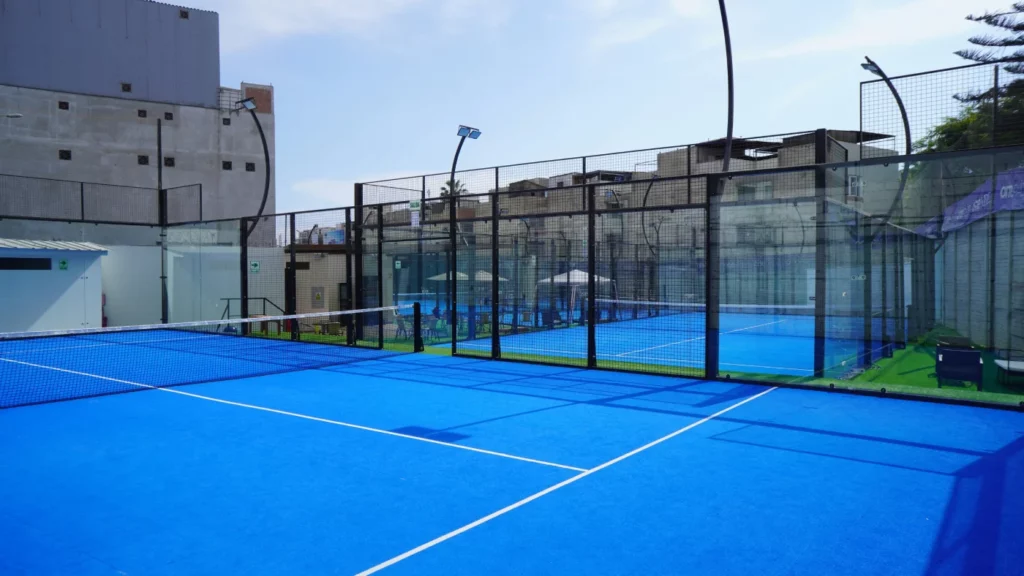
A padel court is enclosed by glass and mesh walls, with a net across the middle, just like tennis. Here’s how it’s laid out.
The glass walls
The back and part of the side walls are glass — and they're in play. After the ball bounces on the floor, you can let it come off the glass and play it back. It's what makes padel rallies last.
The net & service boxes
A net runs across the middle, just like tennis. Serves are hit underarm, diagonally, into the service box on the far side.
The court
At 20m by 10m, a padel court is about a third the size of a tennis court — so there's far less ground to cover, and far more time to reach the ball.
The Net
The Service Box
The Glass Back and Side Walls
The Cage Sides & Entrance
The Back Area
Naming rights and brand visibility, premium court access for your team, corporate membership, and a year-round place at the heart of the community.
Two players a side. You and a partner share one half of the court and cover it together — one's rarely far from the other.
You start each point by bouncing the ball once on the ground and hitting it underarm — below waist height — diagonally into the box on the far side. No big tennis serves here, which is part of what makes it beginner-friendly.
This is the bit that feels different. After the ball bounces once on your side's floor, it's allowed to come off the glass walls — and you can still play it back. It can't bounce twice on the floor, and you can't let it hit the walls before the floor. Once you get used to using the walls, the rallies get really fun.
The ball must bounce once on the floor of the receiving side before it's played, on the return of serve. After that, you can volley (hit it before it bounces) or take it off the walls — your choice.
The point ends when the ball bounces twice on the opponents' floor, they hit it out or into the net, or it hits the wire fencing on their side before crossing to you. Simple as that.
Padel uses exactly the same scoring as tennis. Points go 15, 30, 40, game. Win six games (by two) and you take the set. Most matches are best of three sets.
If you’ve never followed tennis, don’t worry about it — when you come along to play, someone will keep score and walk you through it. Nobody’s ever been turned away for not knowing “40-love.”
The only quirk worth knowing: at 40-40 (deuce), some social games play a single deciding point rather than the traditional “win by two,” just to keep things moving.
You don't need to buy anything. Rackets are available to hire at the club, and balls too — just turn up. Wear whatever you'd wear for any sport, and flat trainers.
Every Padel 100 court is free to play, Monday to Friday from 11am to 3pm. It's the easiest, no-pressure way to try the game — no cost, no commitment.
Padel's doubles, so grab three friends and you've got a game. No group of four? Your club's community can help you find players at your level.
Find your nearest club, grab a few friends, and play your first game for free.